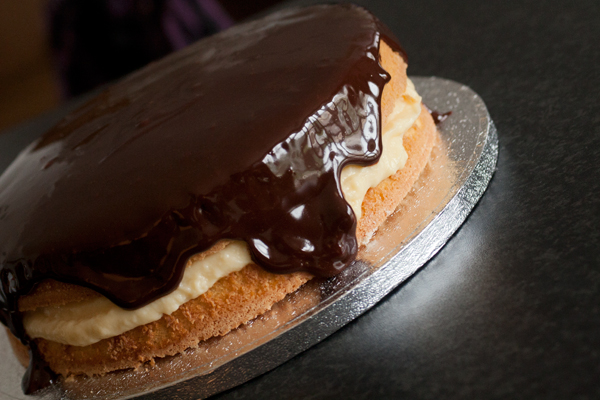
Boston Cream Pie

Happy Father’s Day! This week, in honor of the man who has somehow managed to put up with me for the past twenty-five years, I decided to make my dad’s favorite: Boston Cream Pie. I remember my mother making this on several occasions for my dad, whether it be the classic recipe or one made with chocolate cake instead. Once I got older, there were a few times she helped me make a Boston Cream pie of my own for dad’s birthday or Father’s day.

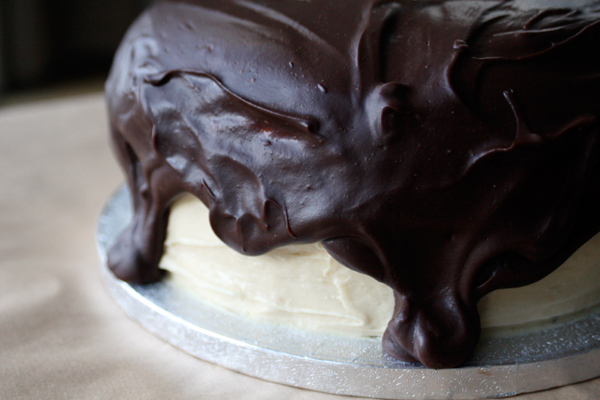
I was so excited about making this cake, because for the first time ever I managed not to burn or ruin the pastry cream that fills the middle. But then I was a bit let down by how terribly it photographed. There’s something about shiny chocolate ganache that (while it is absolutely DELICIOUS) just doesn’t photograph well. Eventually I’ll figure it out, but until then you all will have to deal with my not-so-pretty ganache shots.

This recipe comes from Martha Stewart, but with a few minor adaptations. The cake is wonderfully dense and moist, and I’m told the cream in the middle is delicious (I don’t care for pastry cream or custards, so I’m going off the general opinion here). The key is to not overbeat the mixture – my batter had tons of little bubbles in it when I put it into the oven. However, Martha uses a 2-inch deep pan and cuts the cake in half. I used two 9-inch round tins instead to make it a bit more foolproof in case the cake didn’t rise a full 2 inches.

Ingredients

For the cake:

  • 2 Tablespoons (28 grams) unsalted butter
  • 1 1/4 cups sugar
  • 1 1/4 cups cake flour
  • 1 1/4 teaspoons baking powder
  • 3/4 teaspoon salt
  • 2 eggs
  • 2 eggs yolks
  • 3/4 whole milk
  • 2 teaspoons vanilla
For the pastry cream:
  • 2 cups milk
  • 1/2 cup sugar
  • 4 egg yolks
  • 2 teaspoons vanilla
  • pinch of salt
  • 3 Tablespoons cornstarch
For the chocolate ganache:
  • 3 ounces dark chocolate, roughly chopped
  • 7 Tablespoons heavy cream

Directions

1. Preheat oven to 350° F (approx 175°C). Grease your cake tins with butter then line the bottom with baking paper. Grease the baking paper, then coat the entire pan with sugar. Tap out the excess sugar and set aside.

2. In a medium bowl, sift together the flour, baking powder, and salt, then set aside. In your mixer fitted with the whisk attachment, whisk the eggs and egg yolks on medium speed for about 1 minute. Gradually add in the sugar and continue to whisk until light and fluffy – about 3 minutes.

3. Gently heat the butter and milk in a small saucepan, being careful not to let the milk boil. Remove from the heat and stir in the vanilla extract. With the mixer continually running, slowly pour in the milk mixture into the egg mixture.

4. Add the flour mixture 1/4 cup at a time until fully incorporated. Once everything is mixed together, transfer into your prepared pans, being sure to keep the batter as even as possible.

5. Bake for 35 – 40 minutes until the cake is a light golden color. Halfway through the baking time, it would also be a good idea to rotate the pans so that everything is baking evenly. Once the cake is done, cool in the pan for 15 minutes before turning out onto a wire rack to cool completely. The cakes should be a bit sticky on the sides and bottom from the sugar coating on the pan.

6. While the cakes are cooling, prep the pastry cream (this is the tricky part!): bring the milk and 1/4 sugar to a simmer in a medium saucepan over medium heat. In a separate medium bowl, whisk the egg yolks and the rest of the sugar together, followed by the vanilla and salt. Whisk in the cornstarch, 1 Tablespoon at a time. While continuing to whisk, slowly pour 1 cup of the milk mixture into the egg mixture.  Using a fine mesh sieve, strain the mixture back into the remaining milk mixture in your saucepan. Continue to cook over medium heat, whisking constantly, until the mixture comes to a boil (about 4-5 minutes).

7. Transfer the pastry cream to a medium bowl and cover with plastic wrap, gently pressing the plastic onto the surface to prevent a skin from forming. Place in the fridge and allow to chill for at least 3 hours.

8. Once the pastry cream has chilled, and the cakes are completely cool, it’s time to assemble. Place your bottom tier, bottom-side up, onto your cake board. Coat with a generously thick layer of your pastry cream, followed by the other cake layer, also bottom-side up.

9. To make your chocolate ganache, heat the heavy cream in a small saucepan and bring it to a boil. Place the chocolate into a medium heat-proof bowl, then pour the heated cream over it. Stir until the chocolate completely melts, then let cool for a few minutes before pouring over the cake. To make a runnier ganache (like mine), just use a bit more cream. Otherwise, you’ll need to use a spatula to spread the ganache a bit.

10. Chill the cake in the fridge for at least 20 minutes before serving.

Pound Cake

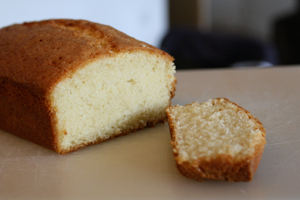
Whenever strawberries came in season, I used to beg my mom to bake pound cake to go with them. Pound cake is a traditional recipe that consists of 1 pound each of flour, sugar, butter, and eggs. This recipe is a bit different, but it works just as well, and makes a wonderful cake. Serve sliced with some strawberries and whipped cream for a fresh-tasting dessert, or try with some different types of jams as well. The cake’s flavor is versatile and would go well with many seasonal berries and fruits.

Ingredients

  • 1 1/2 cups (345 grams) butter, at room temperature
  • 6 eggs
  • 3 cups flour
  • 2 1/2 cups sugar
  • 3 teaspoons baking powder
  • 1/2 teaspoon salt
  • 1 1/2 teaspoons vanilla extract
  • 3/4 cup milk

Directions

1. Grease two loaf tins and line the bottom and long edges with baking paper and set aside.

2. In a medium bowl, sift together the flour, baking powder, and salt; then set aside.

3. In a large bowl, cream the butter and sugar until light and fluffy. Add each of the eggs one at a time, mixing in between each addition. Once everything is combined, add in the vanilla extract.

4. Add in the flour mixture, alternating with the milk, until everything is thoroughly mixed.

5. Divide the batter evenly into the two loaf pans and place them into a cold oven. Set the oven to 350°F (175°C) and bake for about 1 hour or until the top is golden brown and a cake tester inserted into the top comes out clean.

6. Immediately after removing from the oven, use a knife to loosen the cake from the edge of the pan (the short edges won’t have the baking paper on them). Then allow them to cool in the pan for about 10 minutes before removing to a wire rack to cool completely.

7. Once cool, use a serrated knife to slice and serve. Top with whatever you would like. I like to use strawberries in their own syrup. To make these, slice a bunch of strawberries and place in a storage container before making your cakes. Add a couple teaspoons of sugar and shake gently to coat. Place them in the fridge to soak until your cake in finished. Once the cakes are ready, the berries should have a nice juice to go with them and they’ll be really sweet.

8. Store these cakes by wrapping tightly with plastic wrap, and place in the freezer if keeping for more than a day or two.


Rainbow Cake

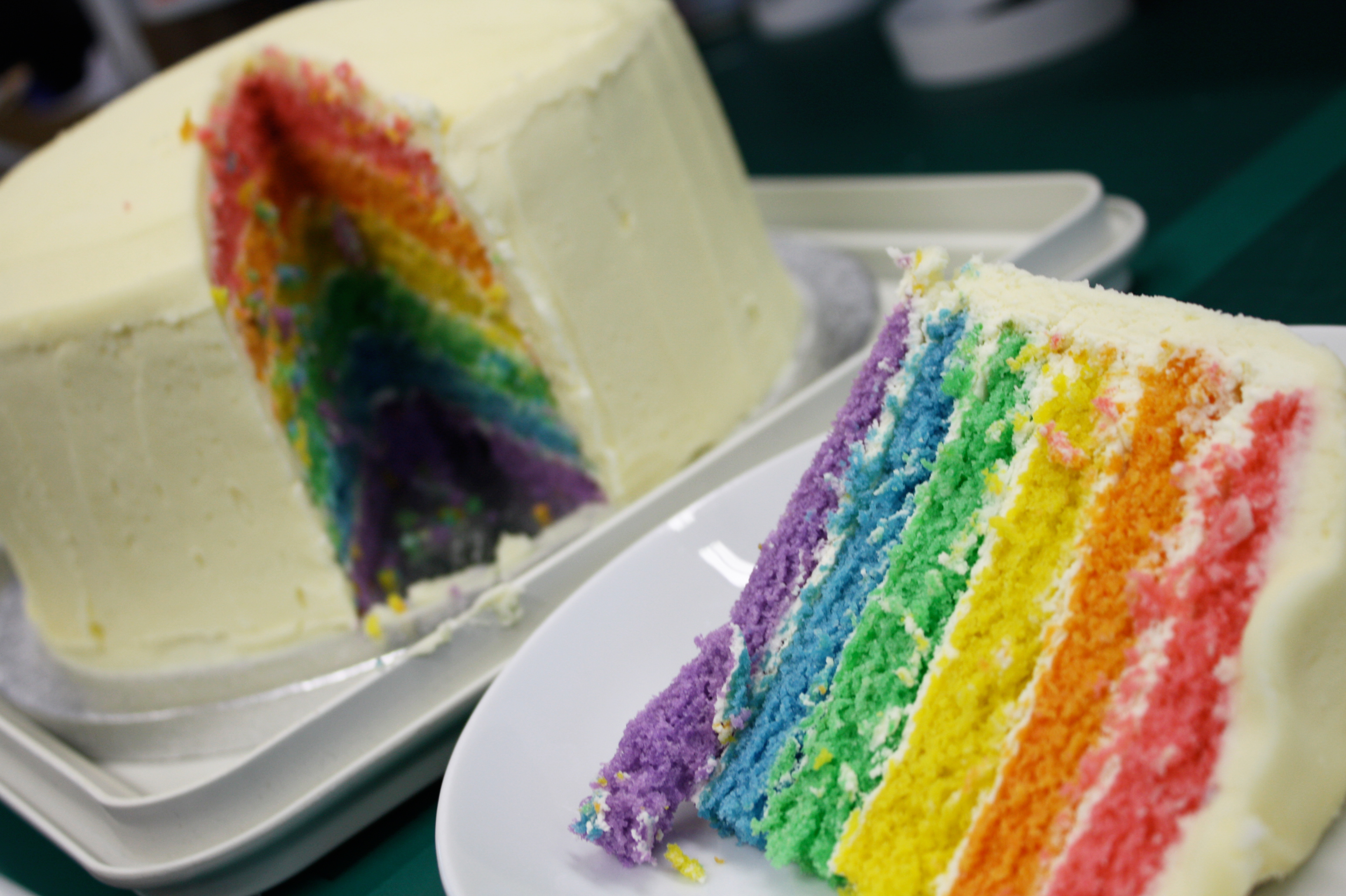
Last year, I made this cake for my birthday, and it was a hit with my friends. However, I was never quite happy with the buttercream that I used with it – it was too sweet and made eating this cake quite a challenge.  So, I decided to give it another shot and take it in to share with my co-workers. So, being that I work at a design agency, I think it went over quite well in ‘yeah, we work with colour’ kind of way.

The key to this cake is time. And a set of scales. Be sure to watch the layers when they’re in the oven, because they’re really thin and you can easily overbake them. Try different colour combinations as well! It would be fun to see one that’s more of a monochromatic theme.

For this recipe, I used the batter below, but you can cheat and use a couple of boxed cake mixes instead. For the buttercream this time around, I made three batches of the lemon buttercream that I used on my Earl Grey Cupcakes. I made two of the batches with the lemon zest and used them to coat in between the layers and to do the crumb coat. The third batch for the final coating didn’t have the lemon zest in order to have a pure white finish with no lemony bits.

Ingredients

  • 1 cup (230 grams) butter, room temperature
  • 2 1/3 cups sugar
  • 5 egg whites, room temperature
  • 2 teaspoons vanilla
  • 3 cups flour
  • 4 teaspoons baking powder
  • 1/2 teaspoon salt
  • 1 1/2 cups (355 milliliters) milk, room temperature
  • gel food colouring – I used the Wilton food colours.

Directions

1. Preheat oven to 350° F (approx 175°C). Butter your 8-inch cake tins and line with baking paper. I only have two pans, so I had to do this in multiple stages, just clean and reuse them between each layer – like I said earlier, this takes time! Then weigh the empty large bowl that you will be mixing everything in and take note of it. (All you Americans back home, this will be easier in the long run if you set your scale to grams.)

2. In a medium bowl, sift together the flour, salt, and baking powder. Separate your egg whites into a separate small bowl and set aside.

3. In the large bowl, cream the butter and sugar. Then slowly add your egg whites, mixing in as you go, followed by the vanilla.

4. Add in the milk and the dry ingredients, alternating between the two until you have combined everything completely.  Then weigh your filled mixing bowl. Subtract the weight of your empty bowl to get the weight of the batter you need to divide. Divide that number by the number of layers you intend to make, so if you’re doing the complete rainbow, it will be six.

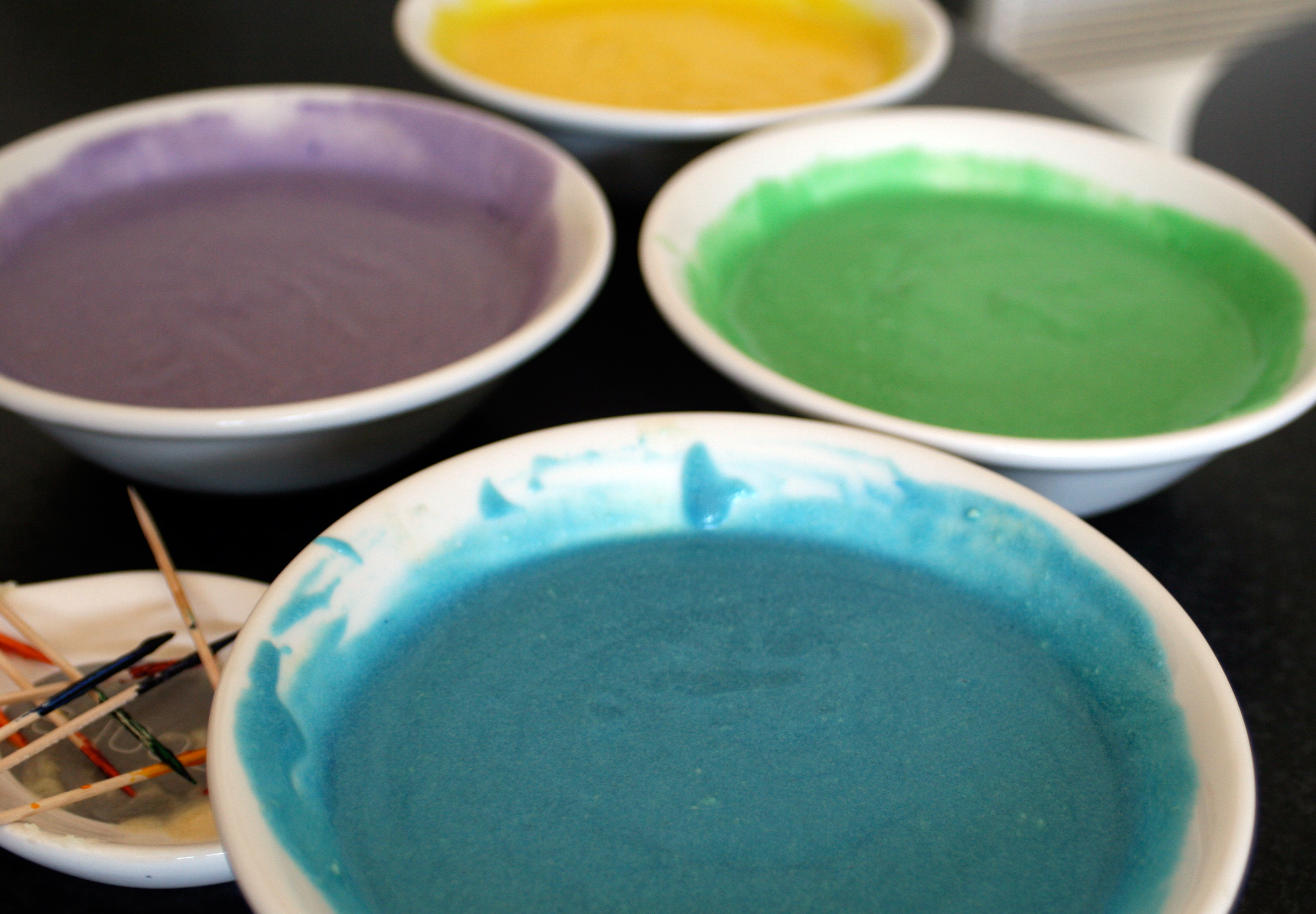
5. As with the mixing bowl, weigh the bowls you will use to colour the layers while empty (or just set them on the scale and tare it). Gradually add in your batter until it weighs its even portion. Repeat this process with each of the bowls until you have enough for all of your layers.

6. Mix in the gel food colouring to each of your batters until they reach your desired hue. Pour into your cake tins, using a spatula to get as much of the batter out as possible. The layers will be very thin!  Bake for about 15 minutes, or until a cake tester comes out clean.

7. Let the cakes cool in the pan for about five minutes before transferring to a wire rack to cool completely. While all of the layers are cooling, make the first two batches of buttercream (the ones with the lemon zest).

8. To stack the layers, coat each one with a thin layer of the icing, trying to keep them as even as possible to prevent toppling over. Once all of the layers are stacked, coat the top and outside with the rest of the icing, creating a crumb coat. Place the cake in the fridge to allow the crumb coat to set.

9. While the cake is in the fridge, mix up the third batch of buttercream (the one without the lemon zest). Use this batch to coat and complete the cake with a clean, white finish!

Chocolate and Peanut Butter Cake

This. Cake. Is. Amazing.

There’s simply no other way to put it. In fact, I’m pretty sure that chocolate and peanut butter is the best food combination on earth. After having one slice of this decadent cake, I found myself dreaming about having another one! In fact, days after the cake was gone, I was still jonesing for it – which is a little sad really.

The triple-layer cake itself is super moist and rich, and the peanut butter frosting goes really well with it. And the chocolate ganache is just an extra treat that really, well, takes the cake! Big thanks to Smitten Kitchen for this recipe, as it has shot it’s way up to the top of my favorite foods list!

My only complaint for this cake is that it was incredible difficult to photograph, because the ganache kept reflecting all of the light. After spending about an hour trying to get one decent photo, I’ve added a pop-up photography studio kit to my Amazon list. So hopefully future cakes won’t be as temperamental.

Ingredients

For the cake:

  • 2 cups flour
  • 2 1/2 cups sugar
  • 3/4 cup unsweetened cocoa powder
  • 2 teaspoons baking soda
  • 1 teaspoon salt
  • 1 cup vegetable oil
  • 1 cup sour cream
  • 1 1/2 cups water
  • 2 tablespoons white vinegar
  • 1 teaspoon vanilla extract
  • 2 eggs
For the frosting:
  • 10 ounces cream cheese, at room temperature
  • 1/2 cup unsalted butter, at room temperature
  • 5 cups icing sugar, sifted
  • 2/3 cup smooth peanut butter
For the chocolate ganache:
  • 8 ounces semisweet chocolate chips (I happened to have some from my last trip to the US, but you can use a mix of milk and dark chocolate.)
  • 3 tablespoons smooth peanut butter
  • 2 tablespoons light corn syrup (I substituted with vegetable oil, since the UK is lacking in corn syrup)
  • 1/2 cup half-and-half (again, substituted by using a 1:1 mix of milk and whipping cream)

Directions

1. Preheat oven to 350° F (approx 175°C). Butter three 8 or 9-inch cake tins and line with baking paper.

2. Sift together all of the dry ingredients into a large bowl and mix well. Whisk in the vegetable oil and sour cream, then gradually add the water. Once everything is combined, whisk in the eggs, vinegar, and vanilla. Divide the batter evenly amongst the three prepared tins.

3. Bake for 30-35 minutes, until a cake tester comes out clean. Let the cakes cool in their pans for 20 minutes before transferring to a wire rack to cool completely. Place the cakes in the fridge while you prepare the frosting so that they will be easier to work with.

4. To make the peanut butter frosting, cream the butter and cream cheese in a large bowl using an electric mixer. Gradually sift in the icing sugar and mix until it’s light and fluffy. Once all of the sugar is mixed in, gradually add in the peanut butter.

5. Remove the cake layers from the fridge and assemble by using 2/3 cup of the frosting between each layer. Then put a thin layer of frosting on the top and sides of the cake – called a crumb coat. Place the assembled cake back in the fridge to let the crumb coat set up. This will prevent any of the dark-colored chocolate crumbs from the cake showing through your frosting layer. After about 15 minutes, remove the cake and use the rest of the frosting to completely cover the cake. (Because you are covering the top with the ganache, I would concentrate more on making sure the sides are covered well and do a thinner job on the top.) 

6. Place the cake back in the fridge while you prepare the ganache.

7. In a double boiler (essentially, use a glass bowl over a pan of simmering water), gradually melt the chocolate chips. Be sure to stir often to prevent them from burning and to help them melt evenly! Add the peanut butter and the corn syrup (or oil, whichever you’re using). Be sure not to let any steam or water get into your mix, or else the chocolate will seize and be ruined.

8. Once the mixture is smooth, remove from the heat and whisk in the half-and-half.

9. Quickly remove the cake from the fridge and pour the ganache over the top, while the ganache is still warm. Don’t worry about it dripping down the sides – it adds a sense of whimsy!


When storing this cake, be sure to keep in the fridge until about 15 minutes before serving. This makes it easier to cut, because it gets quite gooey and messy if left out at room temperature for awhile.