Soft Pretzels

I love pretzels. When I lived in the US, I made sure to always stop by Auntie Anne’s to get a warm, buttery pretzel to snack on as I window-shopped. There’s just something incredibly comforting about a warm pretzel. Not to mention, they’re amazing with a pint of beer. Unfortunately, it seems the Brits haven’t caught on to the amazingness that is the soft pretzel. I see them every now and then, but usually they look like they’ve been sitting around for a couple of years.

Last December, I was in Cardiff with Ben and we came across an Auntie Anne’s in a shopping center and I forced him to buy some, promising that he wouldn’t regret it. Let’s just say, he’s now a fan as well.

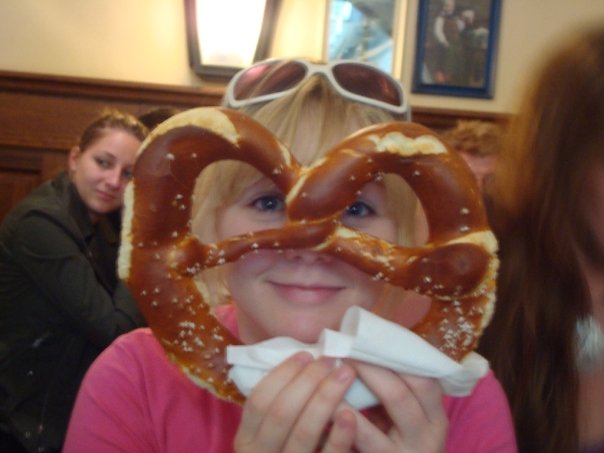
These pretzels are fantastic. Soft and warm on the inside, buttery and crispy on the outside with just the right mix of a subtle sweetness with the salt. The recipe is from Food Network, and is really simple. The key to getting the best shapes is to roll the dough into really thin snakes, as they will puff up quite a lot in the oven! While I kept mine a relatively manageable size, I think next time I make these I’m going to go for the challenge of making a giant pretzel like the one I had in Munich a few years ago – it was literally as big as my face!
Ingredients

  • 2 cups milk
  • 2 packages active dry yeast
  • 6 Tablespoons light brown sugar
  • 4 1/2 cups flour
  • 20 Tablespoons (280 grams) unsalted butter
  • 2 teaspoon salt
  • 1/3 cup baking soda
  • 3 cups warm water
  • coarse sea salt (for sprinkling on the pretzels)

Directions

1. Warm the milk in a saucepan over medium heat until it reaches about 110°F (43°C). It should feel pretty warm if you stick the tip of your finger in it, but not too hot to keep it there. Pour the milk into the bowl of your mixer fitted with the paddle attachment then add in the yeast. Let the mixture sit for about 2 minutes before stirring it on the lowest speed.

2. Stir in the brown sugar and 2 cups of flour. Cut 4 Tablespoons of butter into small cubes and soften in the microwave for about 10 seconds. Add the cubes one at a time, allowing them to work their way into the mixture.

3. Slowly add the remaining 2 1/2 cups of flour into the mixture along with the salt until it forms a sticky dough. Switch to the dough hook attachment and knead for about 5 minutes. Add a bit more flour a spoonful at a time if needed so the dough stops sticking to the sides of the bowl and starts to form a soft ball.

4. After kneading, transfer the dough ball to a large bowl that has been lighted coated with butter or oil. Cover tightly with plastic wrap and let it rise for 1 hour in a warm place.

5. Preheat the oven to 450°F (235°C). Line a few baking sheets with baking paper and set aside.

6. Once the dough has risen, dump it out onto a lightly floured surface and gently punch it down. Break off the dough into pieces that are slightly smaller than two ping-pong balls. You should be able to get 12 to 14 dough balls out of the mixture.

7. Take one dough ball and begin to roll it into a long, thin snake keeping the thickness as even as possible. Continue to roll out the snake until it is about 2 feet long. Then twist the dough into the usual pretzel shape. To help the ends adhere, dip your finger into a bit of water and use it to glue the ends down.

8. Dissolve the 1/3 cup of baking soda with 3 cups of warm water in a deep baking dish or a round cake tin. Deep each rolled pretzel into this mix for about 10 seconds, then allow the excess water to drip off before placing on the baking tray. Sprinkle eat pretzel with the sea salt while it is still wet.

9. Bake for 10-12 minutes until dark golden brown, then remove from the oven and transfer to a wire rack to cool.

10. Melt the remaining butter in a heat-proof bowl, then dip the top side of each pretzel into the butter. Place them onto a wire rack to allow the excess butter to drip off. This will give them a wonderful shiny gloss as well as add the buttery flavor.  Serve while warm for the best results.

For a sweet version of these, omit the seasalt before baking and instead dip the pretzel into a mixture of cinnamon sugar after dipping into the melted butter. 


Boston Cream Pie

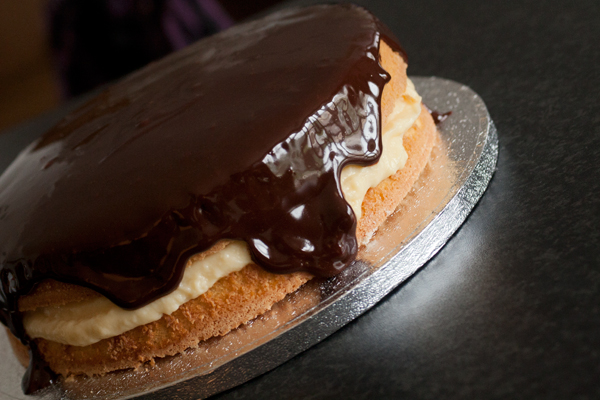
Happy Father’s Day! This week, in honor of the man who has somehow managed to put up with me for the past twenty-five years, I decided to make my dad’s favorite: Boston Cream Pie. I remember my mother making this on several occasions for my dad, whether it be the classic recipe or one made with chocolate cake instead. Once I got older, there were a few times she helped me make a Boston Cream pie of my own for dad’s birthday or Father’s day.

I was so excited about making this cake, because for the first time ever I managed not to burn or ruin the pastry cream that fills the middle. But then I was a bit let down by how terribly it photographed. There’s something about shiny chocolate ganache that (while it is absolutely DELICIOUS) just doesn’t photograph well. Eventually I’ll figure it out, but until then you all will have to deal with my not-so-pretty ganache shots.

This recipe comes from Martha Stewart, but with a few minor adaptations. The cake is wonderfully dense and moist, and I’m told the cream in the middle is delicious (I don’t care for pastry cream or custards, so I’m going off the general opinion here). The key is to not overbeat the mixture – my batter had tons of little bubbles in it when I put it into the oven. However, Martha uses a 2-inch deep pan and cuts the cake in half. I used two 9-inch round tins instead to make it a bit more foolproof in case the cake didn’t rise a full 2 inches.

Ingredients

For the cake:

  • 2 Tablespoons (28 grams) unsalted butter
  • 1 1/4 cups sugar
  • 1 1/4 cups cake flour
  • 1 1/4 teaspoons baking powder
  • 3/4 teaspoon salt
  • 2 eggs
  • 2 eggs yolks
  • 3/4 whole milk
  • 2 teaspoons vanilla
For the pastry cream:
  • 2 cups milk
  • 1/2 cup sugar
  • 4 egg yolks
  • 2 teaspoons vanilla
  • pinch of salt
  • 3 Tablespoons cornstarch
For the chocolate ganache:
  • 3 ounces dark chocolate, roughly chopped
  • 7 Tablespoons heavy cream

Directions

1. Preheat oven to 350° F (approx 175°C). Grease your cake tins with butter then line the bottom with baking paper. Grease the baking paper, then coat the entire pan with sugar. Tap out the excess sugar and set aside.

2. In a medium bowl, sift together the flour, baking powder, and salt, then set aside. In your mixer fitted with the whisk attachment, whisk the eggs and egg yolks on medium speed for about 1 minute. Gradually add in the sugar and continue to whisk until light and fluffy – about 3 minutes.

3. Gently heat the butter and milk in a small saucepan, being careful not to let the milk boil. Remove from the heat and stir in the vanilla extract. With the mixer continually running, slowly pour in the milk mixture into the egg mixture.

4. Add the flour mixture 1/4 cup at a time until fully incorporated. Once everything is mixed together, transfer into your prepared pans, being sure to keep the batter as even as possible.

5. Bake for 35 – 40 minutes until the cake is a light golden color. Halfway through the baking time, it would also be a good idea to rotate the pans so that everything is baking evenly. Once the cake is done, cool in the pan for 15 minutes before turning out onto a wire rack to cool completely. The cakes should be a bit sticky on the sides and bottom from the sugar coating on the pan.

6. While the cakes are cooling, prep the pastry cream (this is the tricky part!): bring the milk and 1/4 sugar to a simmer in a medium saucepan over medium heat. In a separate medium bowl, whisk the egg yolks and the rest of the sugar together, followed by the vanilla and salt. Whisk in the cornstarch, 1 Tablespoon at a time. While continuing to whisk, slowly pour 1 cup of the milk mixture into the egg mixture.  Using a fine mesh sieve, strain the mixture back into the remaining milk mixture in your saucepan. Continue to cook over medium heat, whisking constantly, until the mixture comes to a boil (about 4-5 minutes).

7. Transfer the pastry cream to a medium bowl and cover with plastic wrap, gently pressing the plastic onto the surface to prevent a skin from forming. Place in the fridge and allow to chill for at least 3 hours.

8. Once the pastry cream has chilled, and the cakes are completely cool, it’s time to assemble. Place your bottom tier, bottom-side up, onto your cake board. Coat with a generously thick layer of your pastry cream, followed by the other cake layer, also bottom-side up.

9. To make your chocolate ganache, heat the heavy cream in a small saucepan and bring it to a boil. Place the chocolate into a medium heat-proof bowl, then pour the heated cream over it. Stir until the chocolate completely melts, then let cool for a few minutes before pouring over the cake. To make a runnier ganache (like mine), just use a bit more cream. Otherwise, you’ll need to use a spatula to spread the ganache a bit.

10. Chill the cake in the fridge for at least 20 minutes before serving.

Apple Cinnamon Rolls


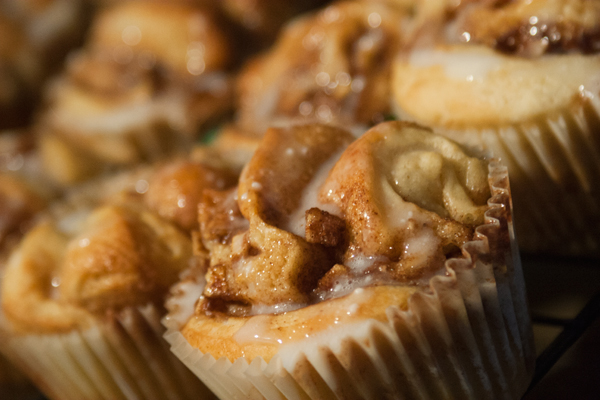
I found this recipe over a year ago and never got around to actually making them.  I love the idea of putting these into cupcake liners so that they’re in equal portions. I had to adjust the recipe a bit, as I found the dough to be a bit too sticky.  I’d also recommend chopping the apples a little rougher, as I completely lost the flavor of them once they baked.

These are great for breakfast or with an afternoon tea. Just beware, because they get quite sticky!

Ingredients

For the dough:

  • 2 cups milk
  • 1 package yeast
  • 1/3 cup sugar
  • 2 teaspoons salt
  • 8 cups flour
  • 2 eggs
  • 1/4 cup (115 grams) butter, room temperature

For the filling:

  • 1/4 cup (115 grams) butter, melted
  • 1 cup sugar
  • 1 cup brown sugar
  • 3 Tablespoons cinnamon
  • 1/4 teaspoon ground nutmeg
  • 1/4 teaspoon ground cloves
  • 2 cups chopped apples

For the glaze:

  • 1 cup icing sugar
  • approximately 2 Tablespoons milk

Directions

1. In a heatproof bowl, microwave the milk for 30 seconds, stir, then heat for another 30 seconds making sure the milk doesn’t boil. Remove from the microwave and let sit for a few seconds to cool enough that you could dip your finger in it.

2. In a large bowl, or the bowl of your mixer, mix the yeast and sugar. Add in the milk and continue to stir until everything dissolves. At the salt and 2 cups of flour and beat for two minutes.

3. Beat in the eggs and butter. Once they are combined, add in the flour a 1/2 cup at a time, making sure everything’s incorporated before adding the next part. Once all the flour is in, knead the dough for about 5 minutes.

4. Coat a large bowl with a thin layer of cooking oil. Then place the kneaded dough, cover, and set in a warm place to rise for about 40 minutes, or until it is doubled in size.

5. While the dough is rising, mix all of the ingredients for the filling except for the butter in a small bowl.

6. Dust your work surface with flour, then roll out your dough into a rectangle until it’s about 1/4-inch thick. Brush the top of the dough with the melted butter (reserving a bit for later), then sprinkle the filling mixture over the top, leaving about an inch of empty space around all the edges. Gently press the topping into the dough a bit so that it doesn’t move around when you roll it up.

7. Roll the dough into a log, beginning at the long edge of the rectangle. Then slice the log into 24 pieces. Place each slice into a cupcake tin with cupcake liners in each well, folding the edges together into a ‘C’ shape. Cover with a clean towel and set to rise in a warm place for another 40 minutes.

8. Once the dough has risen, preheat your oven to 350°F (175°C). Brush the tops of each of the rolls with melted butter, then place in the oven to bake for about 20 minutes, until the tops are golden.

9. Let the rolls cool before coating with a glaze made from icing sugar and milk.


Jubilee Tea

Last weekend, the Queen celebrated her Diamond Jubilee, meaning she’s had 60 years on the throne.  The entire weekend was filled with festivities – including a pageant on the Thames that had over 1,000 boats parading down the river, and a concert in front of Buckingham Palace. To also mark the occasion, everyone in the UK received two days off, giving us a four-day weekend to celebrate – or in my case, bake.

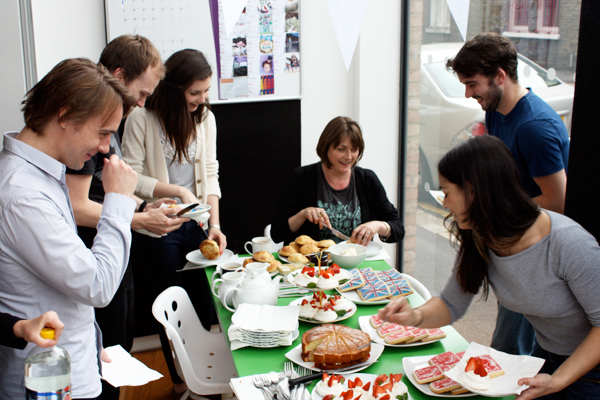
A bunch of the girls from where I work are running the the Race for Life 5K – it’s an event that occurs in different places throughout the country to raise money for Cancer Research UK. To help with the fundraising, I take my baking into work each week and people donate their spare change in exchange for a treat. But for the Jubilee, we decided to to an Afternoon Tea as a more direct fundraiser.

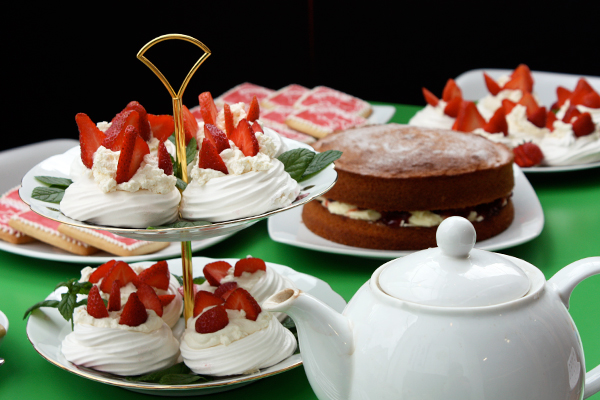
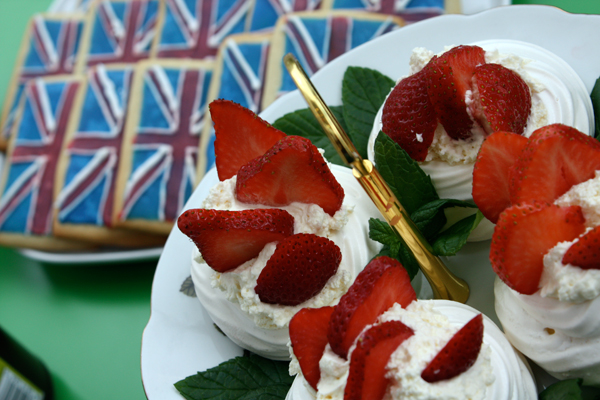
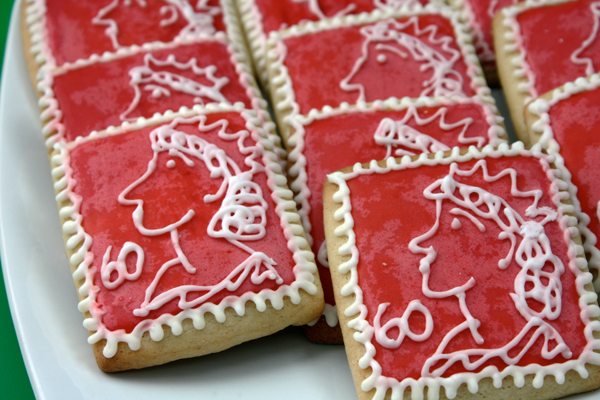
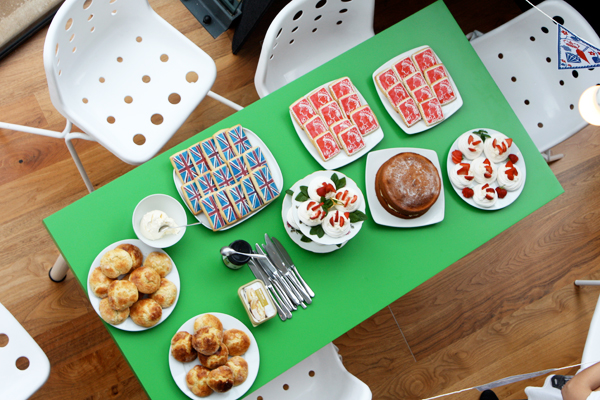
I made my Iced Sugar Cookies, decorated like Union flags and postage stamps, as well as some meringues with whipped cream and strawberries (an homage to a popular British dessert, Eton mess).  Lindsay made some wonderful scones served with fresh jam and clotted cream, which just melted on your tongue. Claire made a classic Victoria sponge (or Elizabeth sponge for this occasion) – which is a type of yellow cake with jam and buttercream frosting between the two layers. And of course, we had a fresh pot of tea and lemonade to go with all of the sweets.

Everything was absolutely delicious and everyone at work enjoyed the break to pay our own little tribute to the Queen, and talk about the Jubilee events. We also raised quite a bit towards our £1,000 goal for Race for Life. If you’d like to donate as well, please sponsor our team at our Race for Life page.